Triangle of youth, pyramid of age
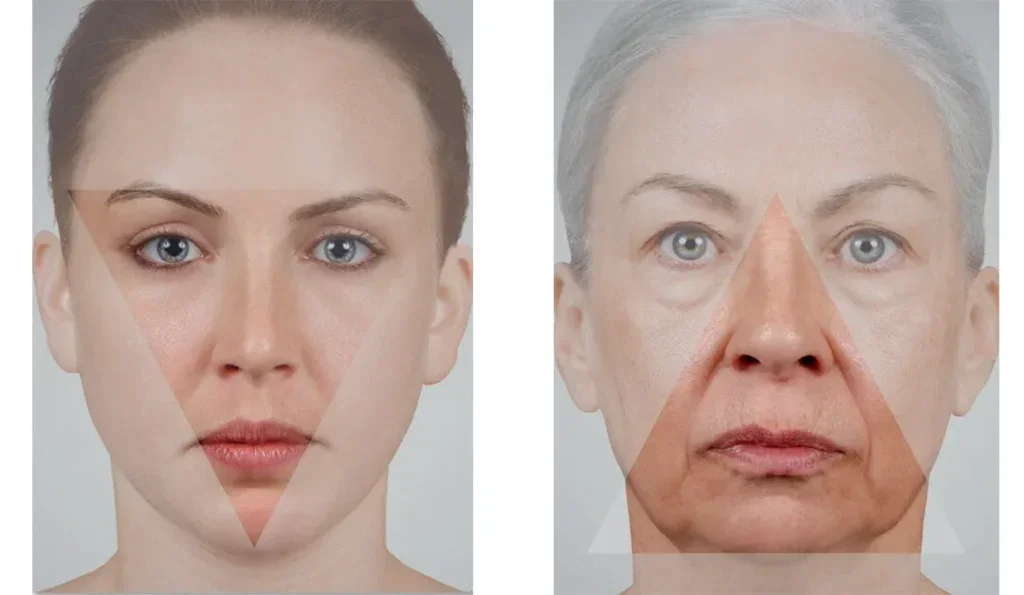
In youth, the face has a distinct triangular shape often called the “Triangle of Youth.” This triangle is characterised by a wider upper face that narrows down to the chin, creating a youthful V-shape. The hallmarks of this shape are high cheekbones, a strong jawline, and fuller volume in the upper regions of the face.
As we age, this triangle gradually inverts, evolving into what is referred to as the “Pyramid of Aging.” This pyramid has a wider base at the bottom due to the sagging of facial structures and loss of volume in the upper face. Features like jowls and a less-defined jawline become more prominent, and there is a general downward shift of facial tissues.
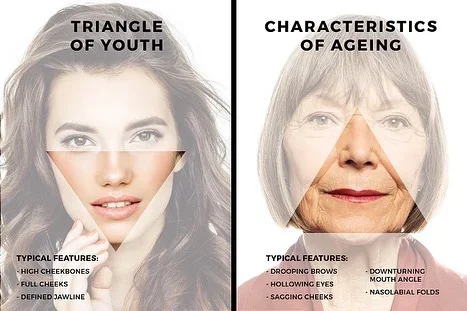
The change from a triangle to a pyramid over time is due to several factors affecting the different layers of the face, which brings us to our next point.
When we think about aging, it’s easy to focus solely on the visible, external layer of our skin. However, it’s crucial to recognise that aging is a comprehensive process affecting far more than just our complexion. It impacts every layer of the facial structure, from the bones that provide our face its foundational shape, to the muscles that animate it, to the fat pads that give it volume, and finally to the skin that covers it all. To understand the transformation from the Triangle of Youth to the Pyramid of Aging, we must delve into each of these layers and understand how they contribute to the aging process.
Bone: the structural foundation
The bones of the face serve as the foundational structure upon which the other layers rest. As we age, a reduction in bone mass can result in less defined facial contours, contributing to the inverted pyramid shape of aging. This loss of bone mass removes critical support for the face, leading to sagging cheeks, hollowing around the eyes, and drooping mouth corners. Additionally, the bones around the eyes shrink, enlarging the eye socket and causing it to appear hollow. This results in dark circles and a more tired appearance.
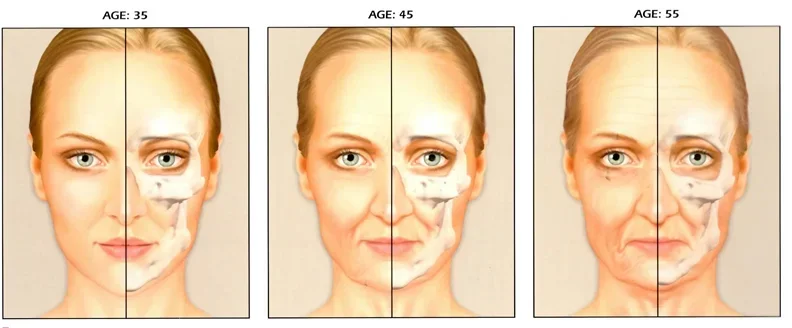
Diagram showing bone loss changes associated with age
FAT: The Volume Provider
Facial fat is critical for the Triangle of Youth. It provides the face with youthful volume and plumpness. Over time, this fat diminishes and shifts downwards, creating hollows and accentuating sagging.
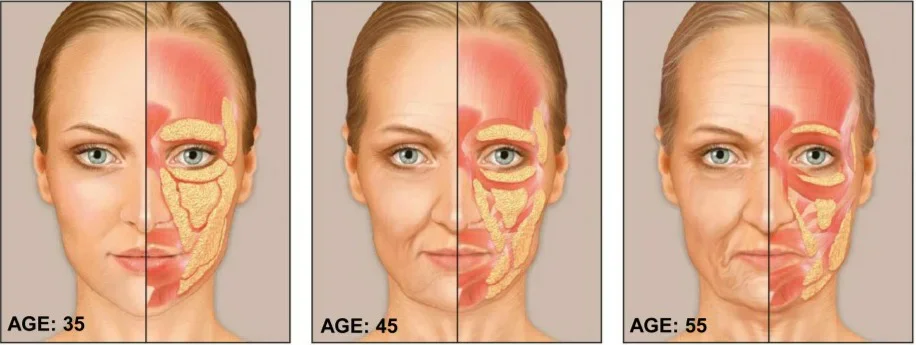
Diagram showing fat pad loss over time
MUSCLES: The Expressive Layer
The muscles in the face are responsible for facial expressions and also play a role in the face’s overall structure. Age can cause these muscles to atrophy, or weaken, which contributes to sagging and wrinkles.
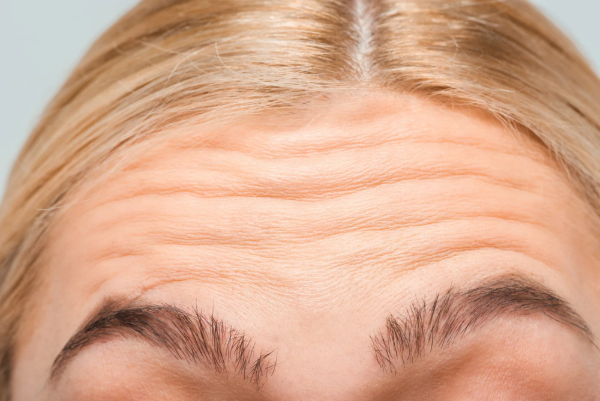
Forehead (Frontalis) muscle activity
LIGAMENTS: THE UNSUNG HEROES
While we often hear about the role of skin, muscles, and bones in facial aging, we rarely talk about ligaments. These are the “connectors” that help hold everything in place. As we get older, these ligaments can stretch out, adding to the sagging and drooping we notice in the mirror.
SKIN: THE FINAL LAYER
Last but not least, the skin serves as the visible covering for these underlying structures. Starting from around the age of 25, the skin begins to produce less collagen and elastin, making it more loose and leading to wrinkles, fine lines, and sagging. These age-related changes are often accelerated by external factors such as sun damage, pollution, screen time, stress, and alcohol consumption.
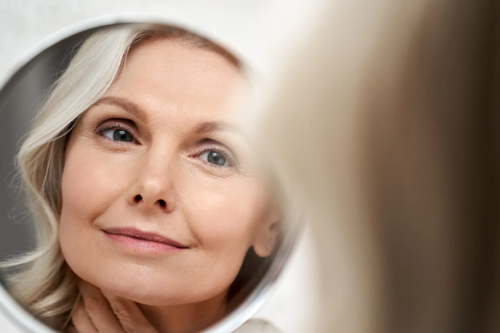
How Can Injectables Help?
Filling and Lifting
Hyaluronic acid fillers are popular for adding volume, especially in the upper face. When expertly administered, they can also lift sagging skin, offering a dual approach to reverting from the Pyramid of Aging back to the Triangle of Youth.
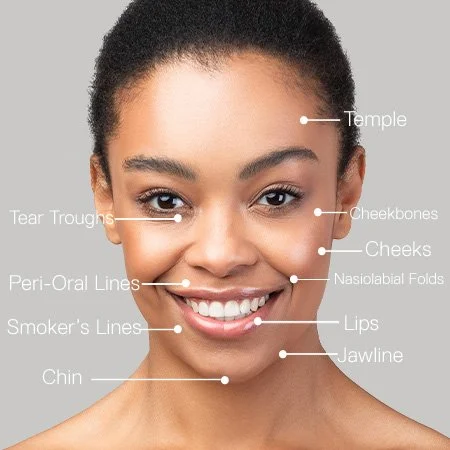
Most common areas to treat with Dermal Filler
Botox and other neuromodulators can help by relaxing the muscles that cause wrinkles when we frown, squint, or smile. This can provide a more youthful and relaxed appearance.
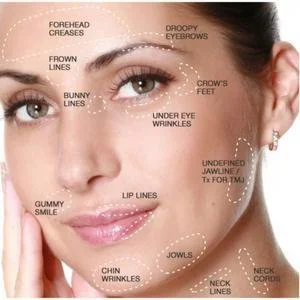
Common treatment areas for Neuromodulator ie Botox
Skin Quality
Some injectables can even improve skin quality by stimulating collagen production, which can improve elasticity and skin tone, further contributing to a youthful appearance.
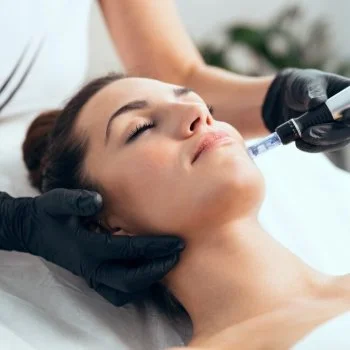
Microneedling treatment is effective to generate collagen and elastin
A Multi-Layered Approach
Often, a combination of different types of injectables can be used to address the various layers of the face, offering a more holistic approach to anti-aging.
In conclusion, the aging of the face is a complex process involving changes in bone structure, fat distribution, muscle tone, and skin quality. While we can’t stop the clock, advancements in aesthetic treatments like injectables offer us a way to maintain a more youthful appearance. Always consult with a qualified medical professional for personalised advice tailored to your needs.